In today’s ever-changing society and a modernised world, businesses and organisations need to keep up with the rapid pace of change, innovations and ideas. In order to implement modernisation from time to time, an effective leadership is must. Everywhere! Hence, of course, a great leader is needed.

Who is a leader anyway? A great leader is someone who recognises the diversity of talent among his followers and achieves unity of common beliefs and directions for them without rescinding the uniqueness of the person (Winston and Patterson, 2006).
These leaders have different leadership styles; according to Uhl-Bien et al (2007), leadership theories don’t relate to modern day practices, they are very different nowadays. He further suggests that leadership theories from the previous centuries are irrelevant to knowledge-based economies these days.
Different leadership styles:
According to Bolden et al. (2011), leadership theories have been categorised as masculine and feminine, masculine leadership is more of controlling, powerful and competitive type of a leadership style. Whereas, the feminine leadership style is more of care, sustenance, support and dependability. Feminine leadership style has a propensity of being more transformational as compared to the masculine leadership style (Eagy et al., 2003). Then there are other leadership styles such as traditional leadership style and contemporary leadership style that have different working styles, for example bureaucratic and shared visions respectively.
Issues of leadership in today’s world and examples:
With the rapid change and increased modernisation, goals of leaders, employees and employers have become more individualistic rather than team-oriented. This leads to various issues of leadership in today’s world: failure to communicate, lack of accountability, clear vision, alignment and poor execution (Moses, n.d). Similarly, both formal and informal styles of leadership exist in today’s world. These styles can co-exist within an organisation (Cherry and Jacob, 2016), this could sometimes lead up to internal conflicts within the work-space, for example, in a hospital, formal leadership is practiced by a nurse who is a professional and employed formally, whereas, informal leader could be practiced by any unprofessional person with no expertise as a nurse but have the authority to take decisions (Cherry and Jacob, 2016). Similarly, if a manager shifts from Sweden to Spain, he may face issues as leadership style in every country is different. Sweden has a more democratic style as opposed to that of Spain, which is more like French leadership style, which is autocratic. The below mentioned images demonstrate the two different leadership styles in Sweden and Spain respectively (Lewis, 2016).

Challenges faced by modern leaders about diversity and equality:
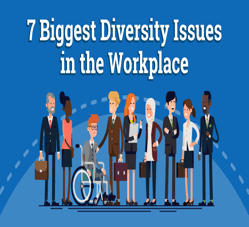
With numerous advantages of globalisation, we are not short of its drawbacks either. Especially in the offices, where thousands of people interact on day to day basis and the top managers and leaders are responsible for bringing them together, dealing with them, this definitely comes with a cost. These leaders are faced with challenges regarding equality and diversity: the problems and issues arising due to the constant battle of equal pay between men and women, sexism, then there is racism, the more modernised a place the more nationalities working together. Leaders from different nationalities have different cultures and different ways of leading an organisation. There is a wide difference between western and eastern leadership styles. It is difficult to adopt western leaderships styles and hence these styles are constantly being questioned (Takahashi, Ishikawa & Kanai, 2012).
Future Scope regarding Contemporary Leadership Styles:

To become a successful leader, especially in such a developing world, we must adapt to all such theories that go hand in hand with diversity, equality, support equal right for all genders, promotes all cultures, races and nationalities. Leadership styles must be parallel with culture, reality but also goal driven and action centric aspects. According to Adair (1973), management operations must be delineated to the employees in a broader spectrum and to a diverse set of individuals without any bias.
To an extent, Contemporary Leadership Styles are relevant in modern changing worldbecause their impact is global, the style aims towards long-term missions and it is driven by innovation, invention and continuous education. In spite of many organisations changing their approach towards modern leadership styles, for some organisations like the insurance industry and customer service industries, contemporary leadership style is still relevant to some extent. The reason being, its focus is customers, it drives business results, influences recruitment of staff and informs brand identity.
Reference List:
Adair, J.E. (1973), “Action-Centred Leadership”. McGraw-Hill, London.
Bolden, R. (2011). Distributed leadership in organisations: A review of theory and research. International Journal of Management Reviews, 13(3), 251-269.
com. (2015). Old vs. New Forms of Leadership – Leadership Skills and Values. [online] Available at <http://www.leadershipskillsandvalues.com/clnontheweb-curriculum/old-vs-new-leadership>
Cherry, B., & Jacob, S. R. (2016). Contemporary nursing: Issues, trends, & management. Elsevier Health Sciences.
Eagly, A. H., & Carli, L. L. (2003). The female leadership advantage: An evaluation of the evidence. The leadership quarterly, 14(6), 807-834.
Moses, M. (n.d). The Seven Biggest Problems with Leadership Today. CEO Coaching International.
https://ceocoachinginternational.com/problems-with-leaders…
Lewis, D, R., (2016). 6 Leadership Styles around the World to Build Effective Multinational Teams. Cross Culture. https://www.crossculture.com/6-leadership-styles-around-the-world-to-build-effective-multinational-teams/
Takahashi, K., Ishikawa, J., and Kanai, T. (2012). Qualitative and quantitative studies of leadership in multinational settings: Metaanalytic and crosscultural reviews. Journal of World Business, 47 (4), 53-538. doi: 10.1016/j.bbr.2011.03.031.
Uhl-Bien, M., Marion, R., and McKelvey, B. (2007). Complexity Leadership Theory: Shifting leadership from the industrial age to the knowledge era. The leadership quarterly, 18(4), 298-318.
Winston, B. E., & Patterson, K. (2006). An integrative definition of leadership. International journal of leadership studies, 1(2), 6-66.

 Leading in a Changing World
Leadership cannot exists in vacuum. The ever changing modernized world constantly needs good leadership to take it to a more efficient phase where scared resources are maximize at a minimum cost.
In this context, contemporary leadership styles are still required to guide an organization or a society to achieve its goals. No society or organization can exist without proper leadership. It would be like a ship without a rudder!
The complexities of today’s society and organization required different leadership styles to cater for its needs.
LikeLike
Leadership cannot exists in vacuum. The ever changing modernized world constantly needs good leadership to take it to a more efficient phase where scared resources are maximize at a minimum cost.
In this context, contemporary leadership styles are still required to guide an organization or a society to achieve its goals. No society or organization can exist without proper leadership. It would be like a ship without a rudder!
The complexities of today’s society and organization required different leadership styles to cater for its different and diverse needs.
LikeLike
The author argues that the dynamic business environment requires managers in organisations to adopt different leadership styles. In addition, he notes that some of the issues affecting leaders in the present world include lack of communication skills, leadership skills and accountability. However, he fails to note that there is no single leadership style that is applicable to all situations.
LikeLike
I agree that there is no single leadership style that can be adopted by organisation. Presently, they operate in a dynamic environment that requires managers to be flexible and use different style of leadership.
LikeLike
Some of the leadership styles contribute to conflict within the organisation. When a leader moves from one organisation to another, they should understand that their style of leadership may not work in the new organisation. Thus, leaders should adjust their leadership style to meet the needs of the environment.
LikeLike
Agreed. It is important for a leader to identify what style works in different contexts. Blind application of leadership style will inevitable result in conflict.
LikeLike